
Mobile security isn’t optional anymore.
Simplified Mobile Device Management (MDM): Why It’s Essential for Business Security and Compliance By Aaron Morris, Founder of Tech Support Austin Mobile devices aren’t just...
Read More
Maximize Security With Cybersecurity Awareness Training
Boost Your Business Security with Cybersecurity Awareness Training Did you know that human error is behind over 90% of data breaches each year? This leaves...
Read More
What is PTaaS and Why Do I Need This for My Small Business?
What is PTaaS and Why Do I Need This for My Small Business? Cyber threats don’t discriminate by company size. In fact, 43% of all...
Read More
Why Your Business Needs a Single Sign-On Solution: Benefits and Best Practices
Introduction: Understanding Single Sign-On Solutions In today’s fast-paced digital landscape, businesses are constantly managing a growing number of applications and systems. Each system often requires its own set of login credentials, making it cumbersome for employees to juggle multiple usernames and passwords. This not only leads to login fatigue but also heightens the risk of security vulnerabilities, such as weak passwords and phishing attacks. A Single Sign-On (SSO) solution is designed to eliminate these problems by providing a unified authentication process. With SSO, users only need to log in once to access multiple applications or systems, streamlining workflows and enhancing security. As more organizations adopt cloud services and remote work environments, implementing a robust SSO solution has become essential for improving both user experience and
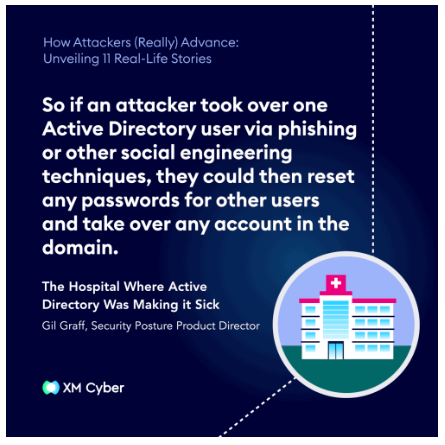
How Attackers Exploit Hybrid Environments: Key Lessons from XM Cyber’s Latest Ebook
In today’s complex hybrid environments, attackers exploit more than just traditional vulnerabilities. They take advantage of misconfigurations, permissive identities, and security gaps that often go unnoticed. XM Cyber’s ebook uncovers these dangerous attack paths with real-world examples, providing a roadmap for organizations to protect their most sensitive assets. Step-by-Step Breakdown of Real Attacks: Each of the 11 attack paths outlined in the ebook offers a detailed look into how attackers move within networks, bypassing controls and compromising systems. These scenarios provide practical insights into the tactics hackers use to achieve their objectives, often without triggering alarms. Actionable Remediation Tips: More than just identifying threats, the ebook provides concrete actions businesses can take to close these gaps. From tightening identity management to improving configuration standards, the

Remote Work for Your Law Firm in 2025?
Effective Remote Work for Your Law Firm in 2025: Everything You Need to Know! The legal industry underwent a significant transformation during the COVID-19 pandemic, with one of the most notable changes being the shift towards virtual and remote work. This shift has not only reshaped how legal services are delivered, but has also highlighted the importance of having the right technology to make remote work as smooth as possible! As many attorneys now operate virtually (with a growing percentage working entirely this way), law firms need to adapt to this remote reality to attract and retain top talent. Of course, there are new challenges that come with this shift, especially regarding regulatory compliance. In this blog, we’ll explore how law firms can effectively support

The Hidden Costs of Technology as a Solopreneur: What You Need to Know
The Hidden Costs of Technology as a Solopreneur: What You Need to Know Running a business on your own as a solopreneur has its undeniable perks—freedom, flexibility, and the ability to set your own rules. However, with these benefits come hidden costs, particularly when it comes to technology. These expenses can catch you off guard and impact your bottom line if not managed carefully. In this post, we’ll break down the key technology-related costs you need to be aware of as a solopreneur and offer some practical tips on how to navigate them. 1. Software Subscriptions As a solopreneur, you likely rely on a variety of software tools to manage different aspects of your business, from accounting and project management to marketing and customer relationship

Action Required: Enable Multifactor Authentication
In today’s rapidly evolving digital landscape, safeguarding your business against cyber threats is more critical than ever. One of the most effective ways to protect your accounts and sensitive data is by enabling multifactor authentication (MFA). At Tech Support Austin, we’re committed to helping our clients stay ahead of these challenges by ensuring their IT environments are secure and resilient.
Starting in 2024, Microsoft will enforce mandatory MFA for all Azure sign-ins and other administration portals. This requirement will roll out in phases, impacting various applications and tools that your business might be using. Here’s what you need to know and how to prepare.
AI Is Taking Over (The Microsoft 365 Suite)!
Let’s talk about artificial intelligence. No, it’s not taking over the world, but it is definitely changing how we handle our daily grind at work! Microsoft Copilot is one of the newest tools in the Microsoft 365 toolbox that is a great representation of how AI can transform your workflow: it’s like having a hyper-efficient assistant who is already an expert on all the M365 apps you currently use. Seamless Integration with Microsoft 365 Here’s what we mean when we say that Microsoft Copilot works effortlessly within the Microsoft 365 environment, enhancing the functionality of the applications you use daily: The Benefits of Integration As you can see, Copilot gives your M365 applications a boost and helps you use them more efficiently! Here are a
Understanding Cybersecurity: A Brief Overview
In today’s digital age, cybersecurity is more crucial than ever. As businesses and individuals rely increasingly on online platforms, the risk of cyber threats grows. Cybersecurity involves protecting systems, networks, and data from digital attacks aimed at accessing, changing, or destroying sensitive information. Key Components of Cybersecurity Network Security: Protects the integrity of your network and data.Application Security: Ensures software and applications are free from threats.Information Security: Safeguards the confidentiality and integrity of data.Operational Security: Manages how data is handled and protected.Disaster Recovery and Business Continuity: Plans for data recovery and business operations post-attack.End-User Education: Educates users on best practices to avoid cyber threats.Common Cyber ThreatsMalware: Malicious software designed to harm or exploit systems.Phishing: Deceptive emails or messages that trick users into providing personal information.Ransomware:


